
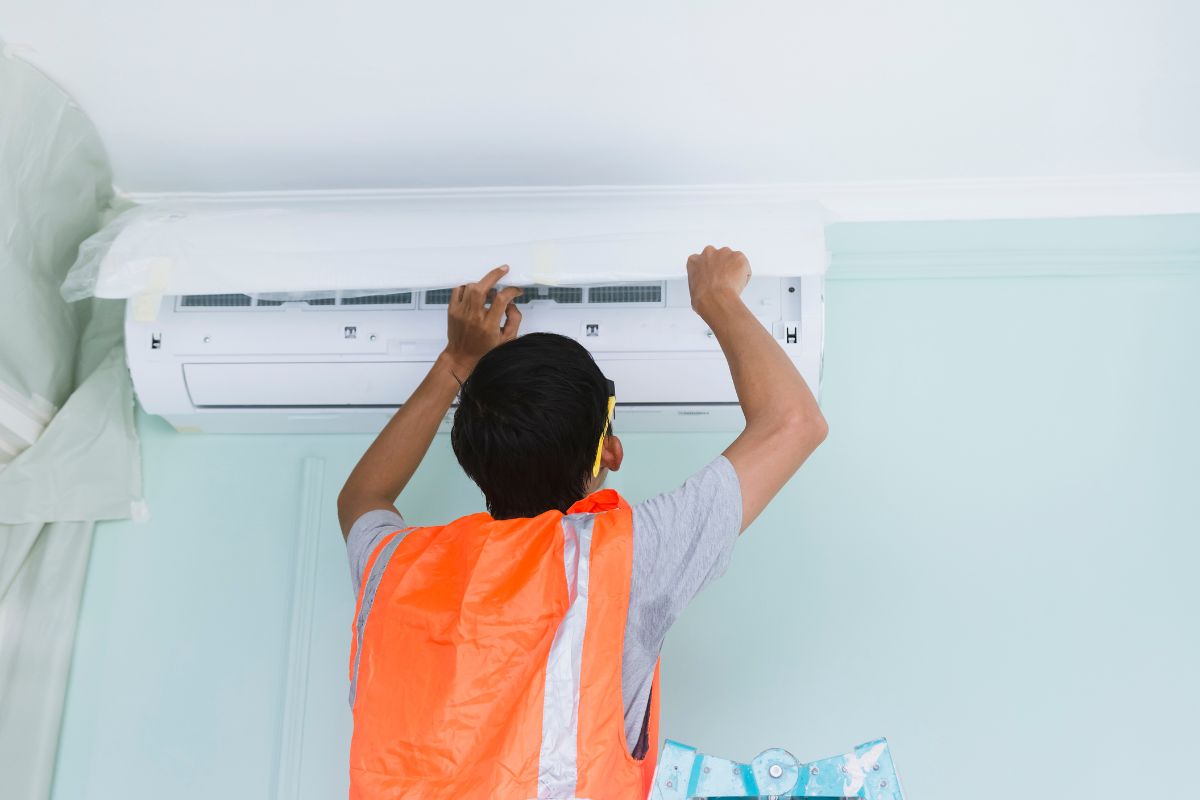
Capacitors are one of the vital parts of your A/C unit that require electric power. This little component is important in enabling the AC unit to start up and operate efficiently.
When an AC capacitor failure occurs, your cooling system may have problems running, make abnormal noises, or completely shut down, resulting in emergency air conditioner repair.
Disregarding the warning signs will only result in more problems, expensive repair bills, and finally, a very uncomfortable indoor temperature level.
What an AC Capacitor Does and Why It Matters
The AC capacitor is used to store and release electrical energy, which, along with powering up the motors inside your air conditioning system. There are generally two types of capacitors that are seen in most residential AC systems:
- Start capacitors
- Run capacitors
The start capacitor is an extra capacitor that gives the motor a kick-start power to get the compressor and fan working.
The run capacitor is necessary to provide the motor with a constant supply of energy, so that these motors work smoothly during cooling.
During an AC capacitor failure, essential AC components will not work. This can result in:
- Weak airflow
- Issues to boot up the system
- Increased energy consumption
- Compressor damage
- Complete system shutdowns
It is one of the most expensive components of the air conditioning system, and it is an element that should not be ignored if it breaks down.
Common Symptoms of AC Capacitor Failure
Being aware of the indicators will help you stop further deterioration.
A few of the indicators that will arise include:
- Hot air blowing through the vents
- Problems starting the AC.
- Clicking or humming noises
- Frequent system shutdowns
- Weak airflow
- Higher energy bills
- Delayed cooling cycles
The best giveaway is that the outdoor temperature is humming, but the fan won’t revolve correctly. Sometimes, the starting will try many times but will be unsuccessful.
Main Causes of AC Capacitor Failure
Capacitors may become damaged over time for a variety of reasons. Capacitors are under high electrical stress and are inherent to the aging process.
Some of the common reasons for capacitor failure:
- Excessive heat exposure
- Power surges
- Aging electrical components
- Poor maintenance
- Overworked AC systems
Air conditioners have to operate for long summer periods, and capacitors suffer from extreme summer temperatures.
Is a Bad Capacitor an Emergency?
When the capacitor fails, an emergency can break within a matter of moments, particularly during hot weather. Sometimes a capacitor problem will start out slowly, but progress to a total failure of the capacitor, and the air conditioning unit may cease to be able to cool the residence.
The decision as to whether the circumstance constitutes an emergency AC capacitor replacement depends on several criteria, such as:
- Outdoor temperatures
- Indoor humidity levels
- Occurrence of vulnerable people.
- Risk of harm to the compressor.
- Down time of the system.
Capacitor replacement can range from $80 to $400, on average. If young children, elderly adults, or people with certain health issues live in the home, power outages during the heat can cause medical problems.

When to Call an Emergency AC Technician
There are certain capacitor issues that need instant aid from a professional. The longer you wait for an AC capacitor replacement, could result in higher the repair costs and the greater the damage to the system.
Get an emergency HVAC company to call if:
- No power to the AC–no power on at all
- The primary cooling fan is constantly operating outside.
Burning odors include:
- The blowers can cause repeated breaker trips.
- AC is operated at high temperatures only
- The capacitor looks puffed up, or may look like it’s leaking.
- Buzzing noises can be heard near electrical components
Electrical problems should never be dealt with unless trained to do so. After electricity is turned off, capacitors are able to hold high voltage energy, which can present a shock hazard.
How HVAC Pros Diagnose Capacitor Problems
Capacitor failure diagnosis requires the use of special tools and techniques by professional HVAC technicians, such as those from Astera. Commonly, it starts with a visual inspection of the system and electrical parts.
Frequently, technicians observe solutions for:
- Bulging capacitor surfaces
- Oil leaks
- Burnt wiring
- Corrosion
- Loose electrical connections
This test will tell if the capacitor is working within the manufacturer’s limits.
In Conclusion
When there are issues with the capacitor, the air conditioner is incapable of cooling, starts producing strange sounds, and can no longer be able to cool down the room.
Solving these issues is not an option of doing nothing, as it may result in the compressor’s elements suffering damage, which therefore also results in high costs, and lastly, the whole apparatus won’t function.
It is important for homeowners to note that the AC capacitor is starting to experience some malfunctions and should seek the help of an HVAC technician.
