
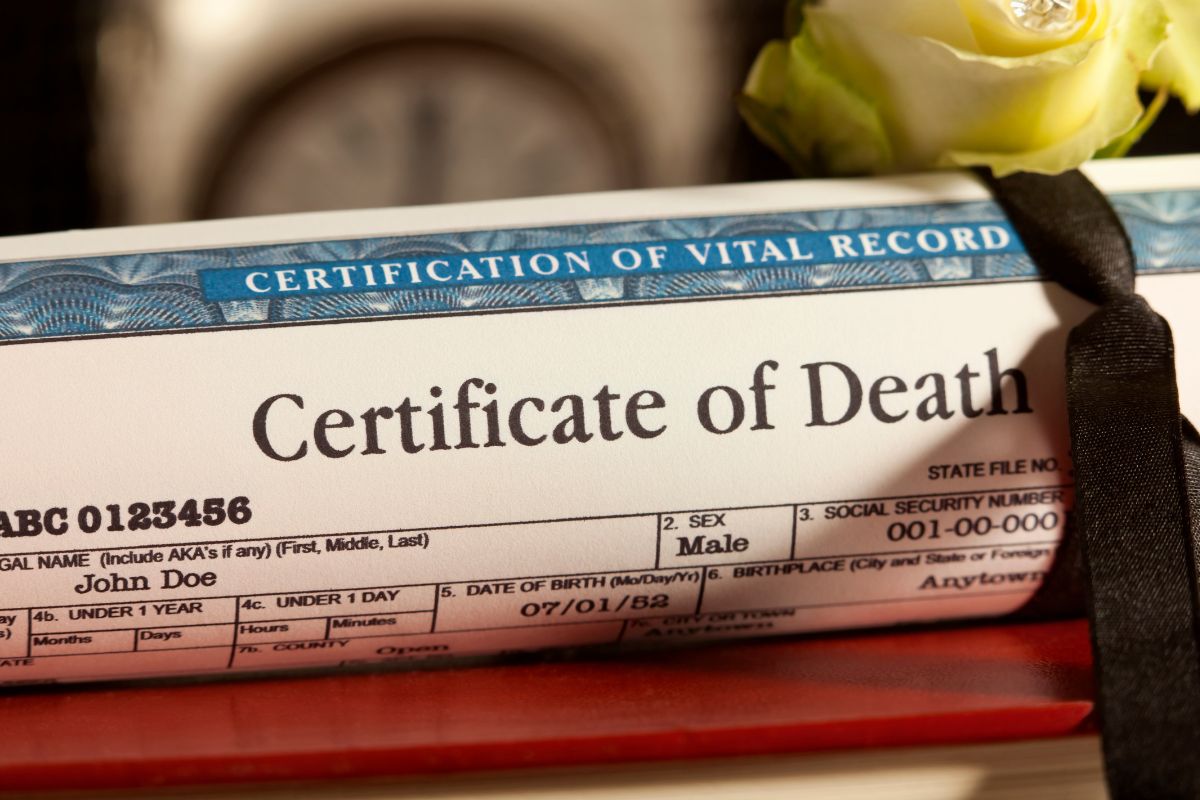
If you’ve been named executor or you’re the person in the family who “handles the admin,” you learn fast that one death certificate won’t cut it.
Banks want their own. So does the probate court. The life insurer? Usually yes. Even the title company for the house sale may ask for a certified copy before closing. It’s normal to need several, and smart to plan the count before you start requesting them.
Before you dive in, skim this plain-English overview of death certificate requirements for legal matters so you know when a certified copy is required and when a photocopy might pass muster. That one read can spare you a back-and-forth with a clerk or a claims department.
What “certified” actually means (and why banks care)
A certified death certificate is printed on security paper with a raised seal or other anti-tamper features.
Photocopies are easy to alter; certified copies aren’t. That’s why financial institutions and courts ask for them, especially when money or title transfers are involved.
If a bank has sent you a list of documents, assume “certified” unless the instructions explicitly say “copy accepted.”
Where to order: the vital records office that registered the death
In the U.S., you request additional certified copies from the state or local vital records office where the death was recorded. There’s no federal office for this.
To avoid outdated addresses and fees, use the CDC’s official directory, “Where to Write for Vital Records,” and click through to the state’s page before you fill anything out.
It lists the correct office, fees, and any quirks you need to know: in-person options, mail-only rules, or required forms.
A quick example: some states (like California) require a notarized sworn statement if you want an authorized certified copy rather than an informational one.
If you’re filing in court, settling accounts, or transferring title, you’ll almost certainly need the authorized version, so plan for a notary before you seal the envelope.
What you’ll usually be asked for: your government ID, your relationship to the decedent (spouse, child, executor), the decedent’s full legal name, date and place of death, and the number of copies.
Processing times and fees vary by state and by ordering method (mail, in person, or sometimes online via the state’s chosen vendor).
If the death occurred outside the United States
When a U.S. citizen dies abroad, the embassy or consulate prepares a Consular Report of Death Abroad (CRDA).
Many U.S. institutions accept the CRDA for legal needs, and you can order additional copies from the U.S. Department of State if you’re next of kin or the authorized representative.
If a bank or court also asks for the foreign civil death record, contact that country’s embassy or consulate for instructions on obtaining it and whether an apostille is required. It’s not unusual for cross-border estates to need both the CRDA and a local certificate.
How many copies to order? Think in “use-cases,” not a magic number
There isn’t a universal number, but you can get close by mapping your tasks:
- Small estate, one bank, one insurer, no real estate: 3–5 certified copies usually cover it.
- Moderate estate, home sale, two banks, brokerage, pension: 6–8 is safer.
- Multiple properties or a business: 10+ isn’t unusual.
Ask each institution whether they’ll return the certified copy after review. Some title companies do; many insurers don’t. If it won’t be returned, count that copy as “spent.”
Timelines, expedite options, and the trade-off between cost and stress
Mail-in orders are often the cheapest and the slowest. If you’re racing a probate filing or buyer’s closing date, look for in-person pickup or a state’s same-day service window.
Some offices allow a walk-in with proof of urgency (a court notice, for instance). Policies change, so verify on the state page in the CDC directory before you plan a trip.
For benefits issues, it’s also smart to confirm that Social Security has the death on record. Funeral homes often submit this, but it’s not guaranteed. You can find instructions on the Social Security Administration.
Who can order the certificates?
States restrict access to protect privacy. Immediate family, legal guardians, and court-appointed representatives are typically eligible for authorized certified copies.
If you’re not next of kin, you’ll likely need proof of authority (Letters Testamentary/Administration or a court order).
If you only need an informational copy for personal records, many states will sell that to anyone, but remember: informational copies usually aren’t accepted for legal or financial tasks.
Avoidable mistakes that cause rejections
Typos matter. If the decedent sometimes used a maiden name or a middle initial on accounts, note those variants in your correspondence so institutions can match records faster.
Don’t skip notarization if your state requires it for authorized copies. And don’t send a check based on an old blog, as fees and addresses are subject to change.
Identity protection while you close accounts
Sadly, identity thieves watch public obituaries. As you shut down accounts, consider freezing credit where appropriate and keep a few certified copies handy for institutions that require them to act.
The Federal Trade Commission’s IdentityTheft.gov offers step-by-step checklists and letters if you suspect fraud.
If tax-related identity theft is a concern (for example, a return filed in the decedent’s name), the IRS has guidance.
Two real-world scenarios (so you can see the moving parts)
Scenario 1: You’re the executor, and a home sale is set for 28 days from now.
- Order 6–8 certified copies from the state where the death was registered.
- Tell the title company you’ll provide a certified copy at closing, and ask whether it will be returned.
- Book a notary today if your state requires an authorized copy with a sworn statement.
- If Social Security or a pension is in play, keep one sealed copy in a folder labeled “benefits” and confirm SSA has recorded the death.
Scenario 2: Your parent died overseas but had U.S. accounts.
- Request multiple CRDA copies via the State Department (link above).
- Call each U.S. bank’s estates department and ask, “Will a CRDA satisfy your requirement, or do you also need the foreign civil death record?”
- If the latter, contact the relevant consulate for instructions on obtaining the foreign certificate and to determine if an apostille is required.
Short answers to questions readers ask all the time
- Can I use a photocopy? Not if money, title, or court filings are involved. Certified means certified.
- Can I order from a different state because I live there now? No. You order from the state that registered the death.
- What if I run out? You can request more later, but you’ll have to wait again. If you’re juggling court dates or closings, it’s cheaper (in stress if not in dollars) to order a few extra up front.
- Who notifies Social Security? Often, the funeral home, but confirm anyway, following SSA guidance.
If you do only three things today, make them these: estimate your copy count based on your task list, check your state’s requirements in the CDC directory, and line up any notarization you’ll need. A half hour of planning now can save you a week of hurry-up-and-wait later.
