
The Hardest-Working Room in Your House
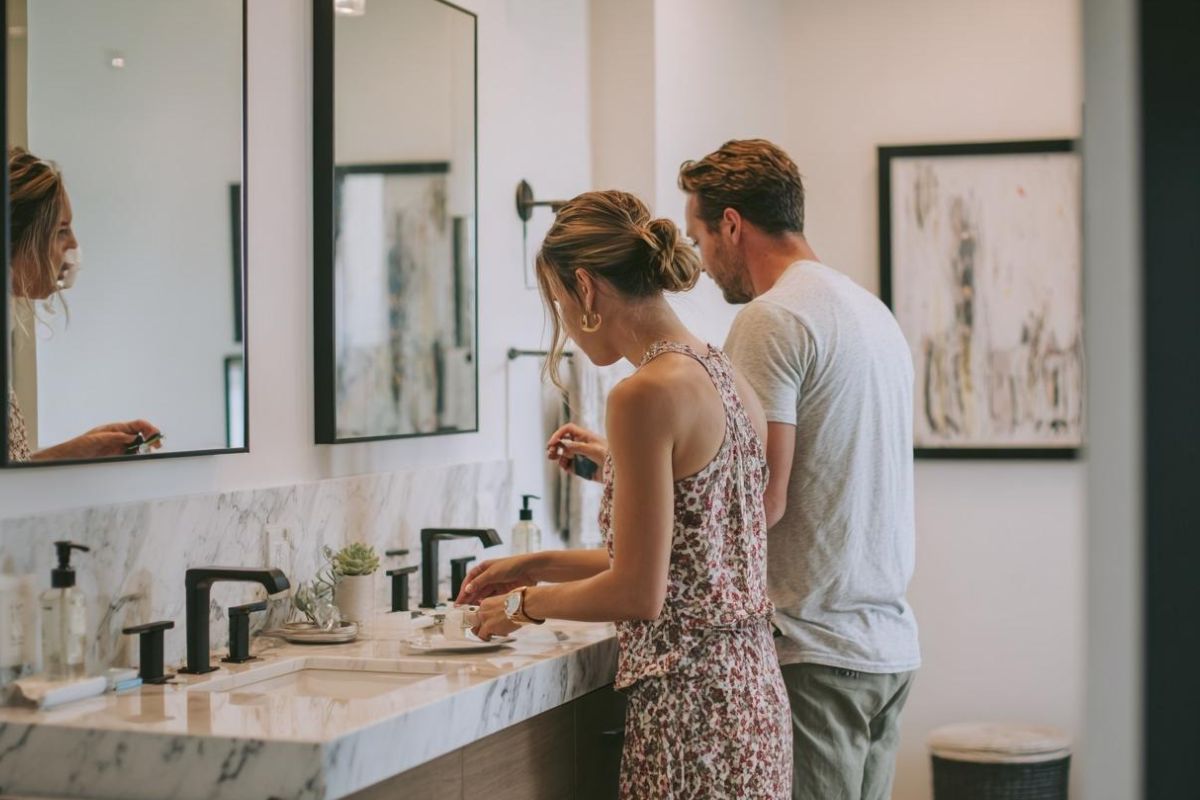
Look, your master bath takes a beating every single morning.
Two adults, one sink, somebody’s got to be at work by 7:15 and the other one’s still waiting to brush their teeth.
That’s not a functional bathroom. That’s a scheduling conflict with plumbing.
Double sinks aren’t some luxury upgrade for people with money to burn. It’s about fixing a problem that happens every day in your house. And buyers get it too.
When a home goes on the market without dual sinks in the master, people mentally file that under “stuff I’ll have to deal with later.”
But here’s the thing and I cannot stress this enough. You can’t just swap in a bigger vanity and call it a day.
The plumbing rough-in will absolutely wreck your project if you don’t understand what’s hiding behind that drywall.
I’ve watched homeowners tear out beautiful tile work only to find their drain line is sitting six inches away from where the new vanity actually needs it to be.
So let’s talk about what you’re really getting into before you start browsing vanities online.
Drainage: Where Most DIY Projects Fall Apart
Your single sink right now probably drains through a 1.5-inch or 2-inch line.
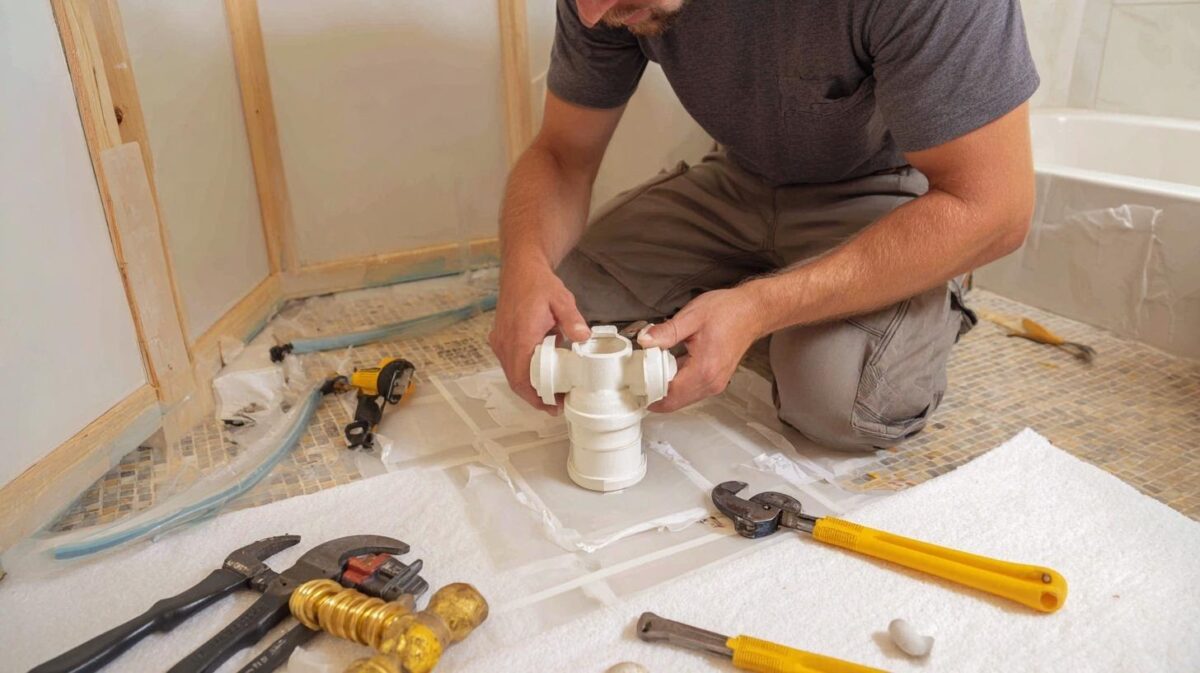
When you add that second sink you need what’s called a double fixture fitting, either a sanitary tee or double wye, and that connects two separate P-traps into your main drain.
Here’s where I see people mess this up constantly: slope.
The International Plumbing Code says you need minimum 1/4-inch drop per foot running toward your main stack.
Both P-traps have to maintain that grade and if your existing drain sits too high or too low you’re looking at opening up the floor or the wall to reposition everything. That’s not a quick fix and it’s definitely not cheap.
Pro Tip: If you’re currently running 1.5-inch drain pipe, just go ahead and upsize to 2-inch while you’ve got everything torn apart.
Yeah code technically allows two lavatory fixtures on 1.5-inch. But hair and toothpaste and soap scum don’t really care what the code minimum says. The 2-inch line means fewer calls to the plumber to snake your drain three years from now.
Venting is another thing people forget about. Each P-trap needs proper venting or you get that gurgling slow-drain situation from siphoning.
IPC usually allows a single vent for both sinks if it ties in within 5 feet of each trap but you really need to measure this out carefully.
Water Supply: Please Don’t Daisy-Chain
I’ve walked into so many remodels where somebody ran the hot and cold to the first sink and then just jumped over to the second one.
Lazy work. What happens? You turn on both faucets at the same time and the pressure drops to basically nothing.
Do it right. Branch your 1/2-inch supply lines directly off the 3/4-inch main and run dedicated lines to each faucet.
And install individual shut-off valves at every single connection point. When that faucet cartridge fails in a few years you’ll be glad you did.
The 30-Inch Rule and Why It Matters
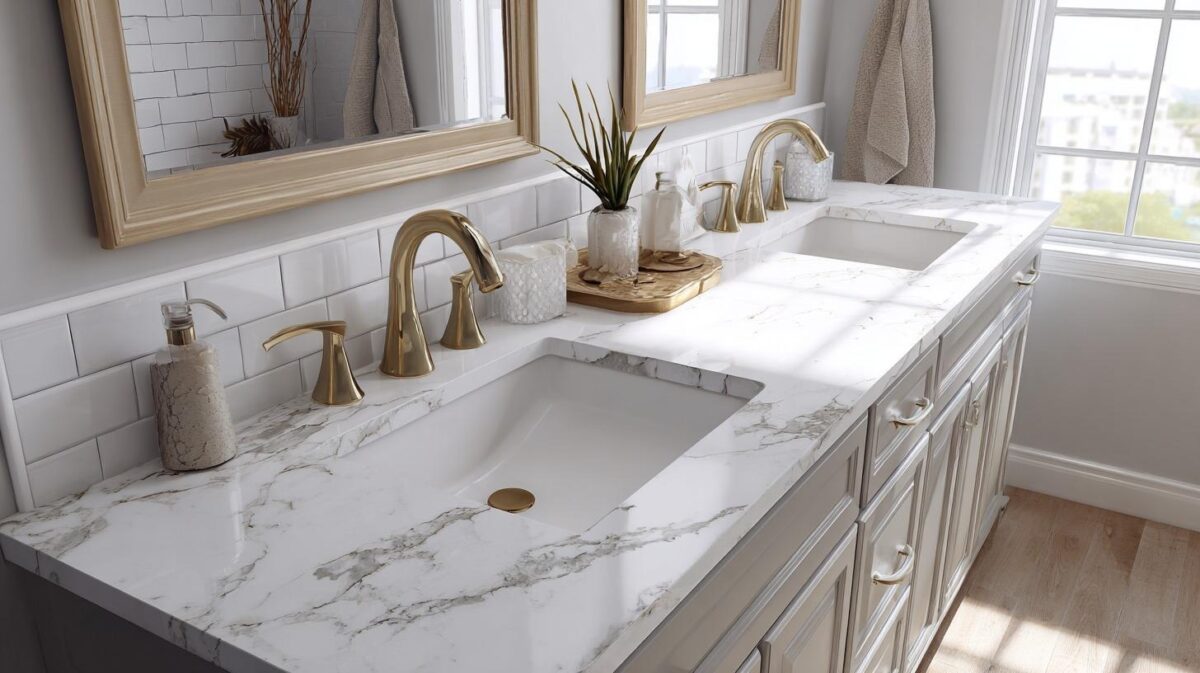
Code and basic common sense both say the same thing here. You need minimum 30 inches center-to-center between your sink drains.
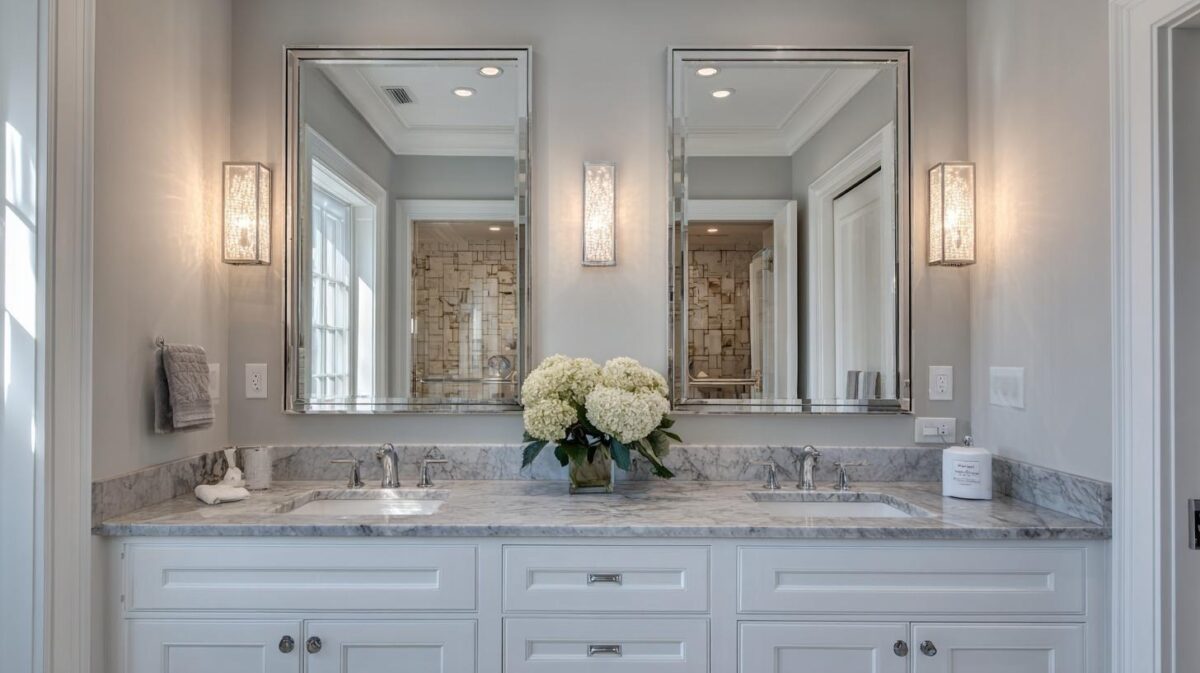
Go any tighter than that and two people brushing their teeth turns into an elbow fight.
Standard vanity widths:
| Vanity Width | Sink Spacing | Counter Space | Works Best For |
|---|---|---|---|
| 60 inches | Adequate | Pretty minimal | Smaller bathrooms |
| 72 inches | Comfortable | Actually usable | Most master baths |
Contractor’s Warning: Measure your rough-in locations before you get attached to any particular vanity.
I can’t even tell you how many times I’ve seen somebody order a 72-inch unit online and then discover their drain stub-outs are only 58 inches apart.
Now you’re either moving plumbing or returning furniture and honestly neither option is great.
Cabinet Guts: Nobody Thinks About This Until It’s Too Late
Here’s something that catches people off guard. Double-sink vanities have to fit two complete drain assemblies inside one cabinet.
Two P-traps, two tailpieces, all the fittings, everything projecting like 6 to 8 inches off the back wall.
Cheap vanities just aren’t built for this. You’ll find solid drawer boxes exactly where your plumbing needs to go, or back panels with no access cutouts, or sometimes both.
Before You Buy: Check These Things
- Interior depth for P-trap projection
- Drawer boxes that are U-shaped or just not there in the plumbing zones
- Back panel that’s removable or at least pre-cut
- Countertop sink cutouts that actually match what you’re installing
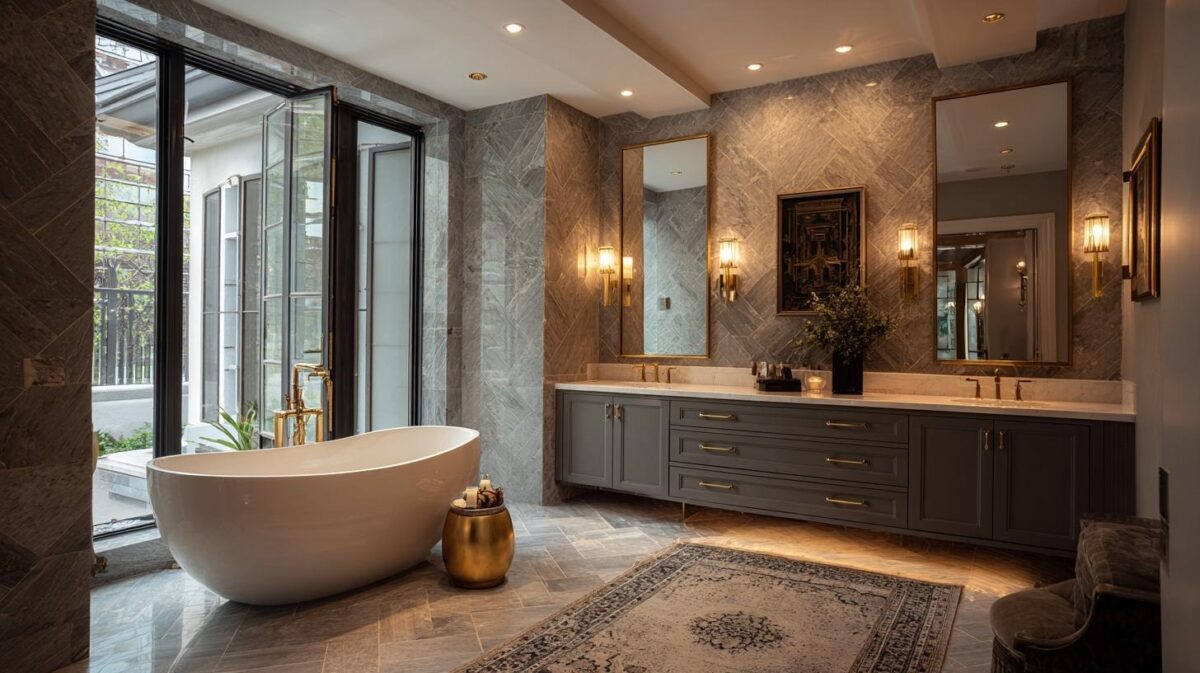
This is why selecting a durable double bathroom vanity that’s actually engineered for dual-plumbing matters so much.
Those furniture-style pieces that somebody converted for bathroom use? They almost always need modifications.
You end up hacking out drawer backs and drilling through panels and basically compromising the whole cabinet before you’ve even finished installing it.
Electrical and Structural Stuff You Can’t Ignore
GFCI outlets: National Electrical Code requires GFCI protection near sinks. Two sink stations means you need to plan for outlets at both.
Either one duplex between the sinks or outlets flanking each station. And check your panel capacity if you’re adding circuits because older homes sometimes don’t have the headroom.
Floor load: That quartz-topped 72-inch vanity with dual ceramic basins you’ve been eyeing? That’s 400-plus pounds sitting on your subfloor.
If you’re on the second floor you really need to look at your joist capacity. Sistering joists or adding blocking isn’t exciting work but it beats having a floor that sags.
Pro Tip: Check your door swing. I’ve seen double vanities installed where the bathroom door can’t even open all the way anymore. Measure everything including how far that door swings into the room.
Bottom Line
Dual-vanity master baths return somewhere around 60-70% of project costs when you sell and they help houses move faster. But honestly the real payoff is just not having to negotiate bathroom time every morning.
Get the rough-in right. Size your drain lines properly. Pick a vanity that’s actually built for the job instead of something pretty that’ll fall apart.
Do those things and you’ve turned wasted square footage into space that actually works for how people live.
