
In the competitive landscape of real estate marketing, effective visual communication plays a crucial role in capturing potential buyers’ attention and helping them envision a property as their future home or investment.
Among the tools available to real estate professionals, floor plans stand out as an essential element for showcasing layouts and spatial relationships within properties.
However, as technology has advanced, traditional 2D floor plans now compete with more dynamic 3D floor plans in the marketing sphere.
Understanding the Role of Floor Plans in Real Estate
A floor plan provides a clear representation of a property’s layout, room dimensions, and the relationship between spaces.
It serves as a visual guide that helps potential buyers understand the flow of a property and how the spaces connect.
With the growing demand for immersive and visually engaging content in real estate, many professionals are now turning to a 3d floor plan rendering company to produce high-quality visuals that elevate their listings.

What Are 2D Floor Plans?
2D floor plans are flat, top-down representations of a property that display walls, room layouts, and key fixtures such as doors and windows.
These plans are typically presented in black and white or with minimal colour, providing a straightforward and cost-effective method for showcasing a property’s structure to buyers.
Benefits of 2D Floor Plans
- Simplicity: Easy to create and understand, 2D plans deliver essential information without overwhelming potential buyers.
- Cost-Effective: They are less expensive to produce compared to 3D plans, making them accessible for smaller agencies or individual agents.
- Quick to Generate: For fast-paced markets, 2D plans can be created quickly to accompany listings as soon as they go live.
Despite their advantages, 2D plans have limitations when it comes to providing a realistic sense of space, scale, and interior potential, which can impact how buyers perceive a property.
What Are 3D Floor Plans?
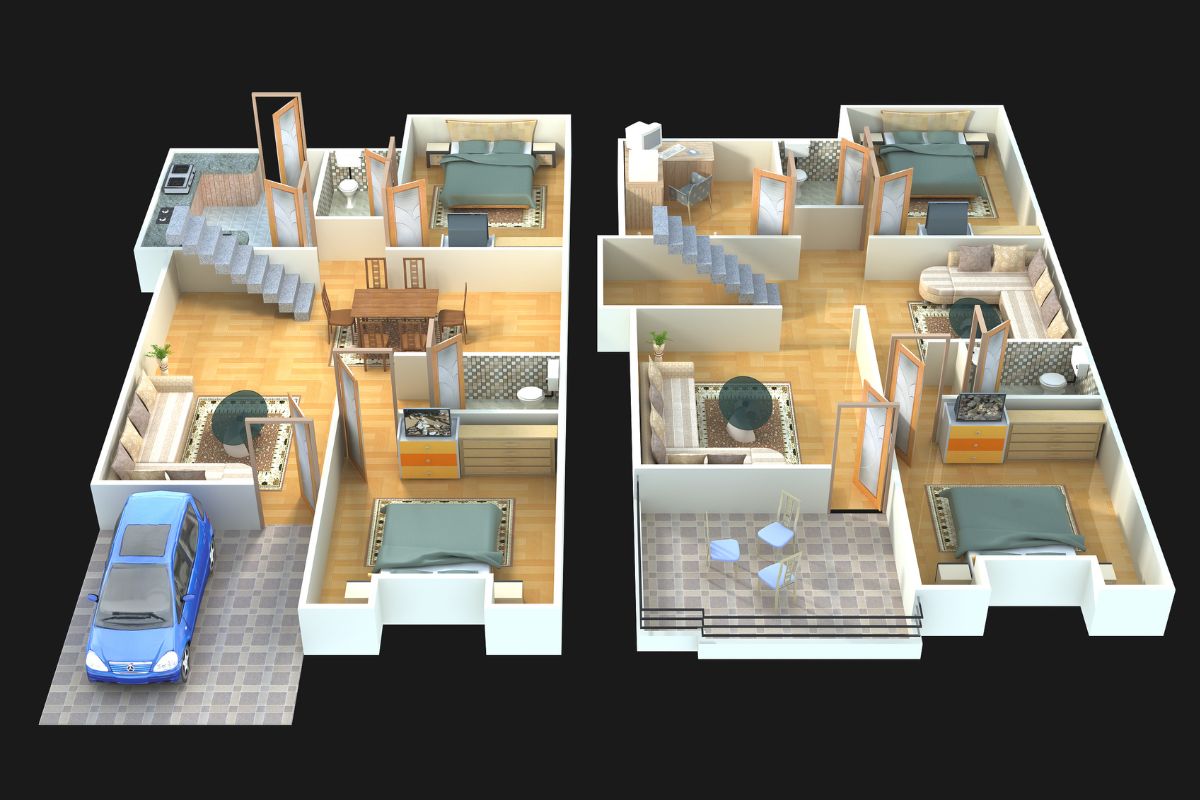
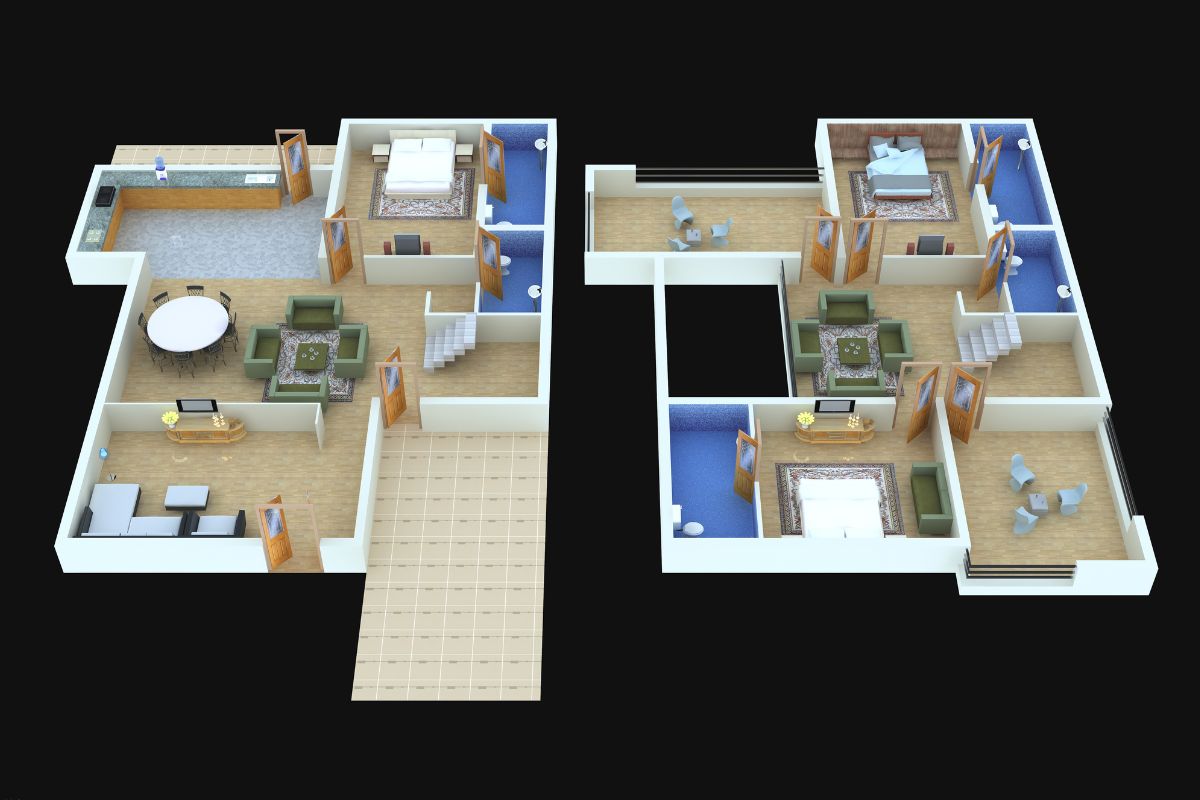
3D floor plans transform traditional layouts into visually engaging, three-dimensional representations that showcase not only the structure of the property but also furniture placement, textures, colours, and interior designs.
These renderings allow potential buyers to visualise the property as it would appear in real life, offering a more immersive experience.
Benefits of 3D Floor Plans:
- Realistic Visualisation: Buyers can better understand how rooms look and feel, seeing the depth, furniture arrangement, and design possibilities.
- Enhanced Engagement: 3D plans capture the viewer’s attention more effectively, making listings stand out in competitive markets.
- Versatility: They can be used in virtual tours, marketing brochures, social media promotions, and presentations.
- Improved Decision-Making: By providing a realistic depiction of the property, 3D plans help buyers make informed decisions and reduce uncertainties.
Comparing 2D and 3D Floor Plans for Real Estate Marketing
When evaluating which type of floor plan is more effective for real estate marketing, it is essential to consider the goals of the marketing strategy, the target audience, and the nature of the property.
Visual Impact
2D plans provide a clean and organised look but may lack the visual impact needed to leave a lasting impression on potential buyers.
3D plans, on the other hand, offer a realistic representation, allowing buyers to emotionally connect with the property, imagining themselves within the space.
User Engagement
In a digital-first marketing environment, engagement is key. 3D floor plans typically generate higher engagement levels due to their ability to depict textures, lighting, and interior design elements.
They encourage buyers to spend more time reviewing the property, which can increase the likelihood of further inquiries.
Clarity and Understanding
While 2D plans are straightforward and clear, they often require buyers to have a level of spatial awareness to interpret the layout effectively.
3D plans eliminate this challenge by providing a true-to-life view, making it easier for buyers to understand room proportions and flow without confusion.
Cost and Production Time
2D floor plans are quicker and less expensive to produce, making them ideal for agents with limited budgets or for listings where a quick turnaround is required.
However, the investment in 3D floor plans often yields a higher return by attracting serious buyers and reducing the time a property stays on the market.
When to Use 2D Floor Plans
- For Budget-Conscious Marketing: When resources are limited, 2D plans can efficiently communicate a property’s layout.
- For Simpler Properties: Properties with straightforward layouts may not require the immersive detail provided by 3D plans.
- As a Supplementary Tool: 2D plans can be used alongside photographs and other visuals to provide clear, quick reference for dimensions.
When to Use 3D Floor Plans
- For Premium Listings: High-value or luxury properties benefit significantly from 3D floor plans, aligning the marketing materials with the property’s prestige.
- To Stand Out in Competitive Markets: 3D plans give a competitive edge, ensuring listings are memorable to potential buyers.
- For Off-Plan Sales: When selling properties that are under construction or in the planning phase, 3D plans can showcase the finished look, helping buyers visualise the investment.
- For Remote Buyers: 3D floor plans, often integrated with virtual tours, assist in attracting buyers who cannot visit the property in person.
How Floor Plans Influence Buyer Decisions
Floor plans are not just marketing visuals; they are decision-making tools that influence how buyers perceive and evaluate a property.
Buyers are more likely to engage with a listing that provides a clear, detailed representation of the property, helping them imagine living in the space and plan their move practically.
3D floor plans can address common buyer concerns, such as whether furniture will fit, how the lighting will affect the rooms, or how the flow of the space aligns with their lifestyle.
This level of detail fosters confidence, reducing hesitation and encouraging quicker decisions.
The Future of Floor Plans in Real Estate Marketing
As the real estate industry continues to embrace digital transformation, the demand for engaging and informative visual content will increase.
While 2D floor plans will remain a staple for basic marketing needs, the use of 3D floor plans is likely to grow due to their ability to provide immersive experiences and detailed insights that buyers now expect.
Technology such as virtual reality and augmented reality will further enhance the role of 3D floor plans, allowing buyers to interact with spaces and personalise their viewing experiences, setting a new standard for property marketing.
Conclusion
Both 2D and 3D floor plans have unique advantages, and the choice between them depends on the property, the marketing strategy, and the target audience.
While 2D plans offer simplicity and cost efficiency, 3D floor plans provide a visually engaging, realistic perspective that resonates with modern buyers.
For real estate professionals looking to elevate their marketing strategies and attract serious buyers, exploring the possibilities of 3D floor plans with VisEngine can provide the tools and expertise needed to stay ahead in a competitive market, ensuring that properties are presented in the most compelling way possible.
