

Before diving into the subletting process, it’s essential to start with a solid foundation – your lease agreement.
Take the time to carefully review its terms, paying close attention to any clauses that may limit or prohibit subletting.
Even if your lease doesn’t explicitly forbid it, securing written approval from your landlord is a must. This step not only keeps you compliant with the agreement but also helps you avoid potential issues such as eviction or legal disputes down the road.
By confirming these details early, you ensure a smooth, transparent arrangement that protects both you and your landlord throughout the sublease period.
Draft a Clear Sublease Agreement
For conflict and miscommunication to be minimized, an agreement to sublease a property should be constructed adequately.
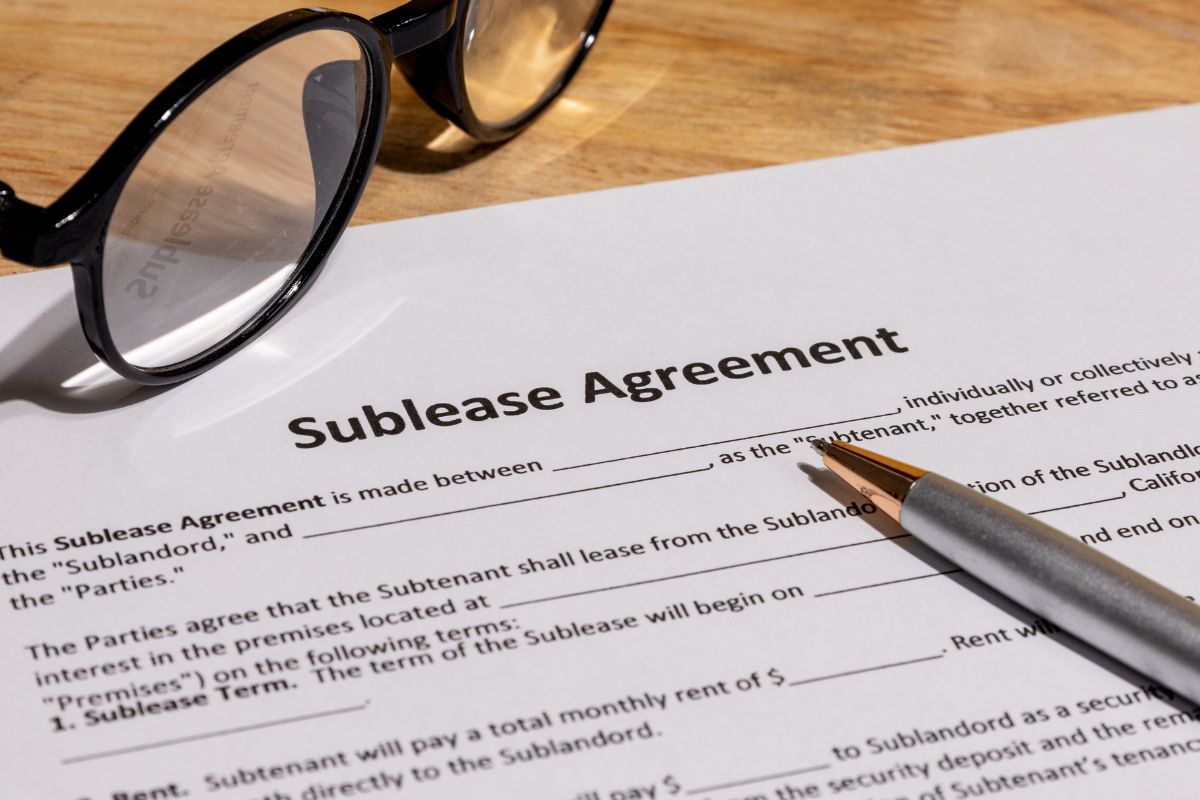
It should encompass all details, including the amount due, due date calendar, and a format to be agreed upon, which could be a bank transfer or online payment service like PayPal, to mention a few avenues.
If all these parameters are carefully adhered to, as indicated in the financial stipulations, each party should have no qualms as to what value they are expected to remit and when, averting disputes on payment.
To further avoid disputes arising, an agreement to sublease a property should include stipulations of the total span of the sublease time, which should include the beginning and ending time, and any instructions required of the subtenant.
Having instructions in an agreement that relate to ending terms, extension options, and restrictions regarding the size and number of any and all extended family relatives a subtenant would hope to have visit should clarify the necessary structure to prepare a sublease.
Also, the contract must explain the duties and obligations of each party regarding the property’s rental upkeep and maintenance.
This entails assigning who performs the maintenance, the means of communicating when something gets damaged or needs repair, and the methods of problem resolution during the sublease.
Provided that the instructions in this regard are concise and in writing, the likelihood of care disputes and property maintenance delays should subside.
Having the sublease agreement signed by both the primary tenant and the subtenant searching for apartments for rent is necessary for the purpose of responsibility allocation and legal adherence.
A signed document is vital in clarifying the arrangement in writing, and it is useful in disagreements or disputes that may arise later.
For that reason, documentation should be provided in every situation as it helps facilitate the arrangement.
Verify Subtenant’s Background
It is important to find a trustworthy subtenant; however, you should not settle for someone just because they are convenient or accessible.
Self-protecting measures should include a comprehensive background check, screening for problematic characteristics, a credit check, and proof of financial responsibility and consistency to pay rent.
Furthermore, you should also contact a subletter’s prior landlords to obtain first-hand accounts of rental behavior, payment history, and property condition to support or contradict any financial records.
Such due diligence will help you determine whether a subtenant is willing to pay and care for your property. The careful pre-screening will greatly mitigate your subletting risk.
As the prime tenant of the rental unit, however, you will remain liable for everything, including any unpaid rent or property destruction.
Legal risk and financial loss will follow you throughout the subletting period, so the need for you to find a reliable subtenant is urgent.

Prepare for the Subtenant’s Move-In
Your interests are best protected when steps are taken to facilitate a subtenants move-in. The first step is a detailed pre move-in property inspection of the subleased space.
The state of the apartment should be recorded in detail in both written form and in photographs. Document the condition of every single room and take photos of any wear and tear.
Take photos of any damages, even the smallest, and take close up photos. These photos will be vital in the documentation process to exonerate you from any potential unreasonable charges that the sub seenter may claim when they move out. You should be able to refer to these photographs when attempting to close the sublease.
Also, avoid confusion on the subtenant’s part by providing them important information regarding the apartment to lessen conflicts/ misunderstandings.
Important rules such as noise, guests, and pets should be communicated to the subtenant to facilitate a smooth period.
The subtenant should also be provided instructions on how they may contact building management/ maintenance, any additional important documentation, and rules formulated by the building.
Other important information includes rules on the document the subtenant must be given that includes rules governing the use of the apartment and any community the apartment is a part of.
Following these preliminary steps not only encourages better understanding but also creates a positive and considerate environment to live with your subtenant.
With communication and the right tools to prepare in advance, both parties are likely to create a supportive environment during the sublet and reduce negativity. This teamwork encourages balance and helps to resolve problems before they escalate.
