
Everyone sells land for the money. But that big payday can get a lot smaller after you pay the real estate agent. Their commission alone can slash 5% to 10% from your final sale price. On a $100,000 property, that’s up to $10,000 gone.
That’s the best argument for selling it yourself—a “For Sale By Owner” deal. You do the work an agent would normally do, and in exchange, you keep the entire commission. It’s more effort, no doubt, but every dollar of that saved commission is pure profit in your pocket.
If you’d rather not pay realtor commissions, you could always sell your land directly to a company that specializes in buying it.
For instance, Sunset Land Investors buys land straight from owners. This cuts out the agent and saves you the typical 5-10% in fees.

Plus, the process is usually much faster and simpler—perfect if you want a straightforward sale without the hassle of listing, marketing, or haggling with multiple buyers.
We’ve outlined the key steps to help you manage a successful private sale and maximize your profit.
Laying the Foundation: Preparation is Profit
Success in a private sale is forged long before the first “For Sale” sign is planted. It begins with a thorough and honest preparation phase where you transform from a landowner into the leading expert on your property.
The single most critical task is determining the right asking price. Setting a price too high will scare away qualified buyers and leave your property stagnant on the market.
Conversely, pricing it too low leaves money on the table, negating the very benefit of selling privately. To find that sweet spot, you must become a detective in your own local market.
Start by conducting a Comparative Market Analysis (CMA). This involves researching recently sold properties in your area that are similar to yours in size, location, zoning, and features.
County clerk records, online land-sale platforms, and local tax assessor websites are invaluable tools for this. Look for “comps” from the last six to twelve months to get a realistic picture of current market value.
Engage a professional appraiser to establish your land’s market value authoritatively. Their unbiased report, typically costing a few hundred dollars, justifies your asking price with confidence.
This cost is a strategic investment. It equips you with powerful evidence for buyer challenges and ensures you do not accept a price below the property’s true worth.
Gather all essential documents as a final preparatory measure. This organization demonstrates transparency and professional conduct, which in turn accelerates the subsequent steps.
You will need:
- The current deed to prove ownership.
- A recent property survey to define the exact boundaries.
- Information on zoning regulations and any restrictive covenants.
- Details on property taxes and utility availability (water, sewer, power).
Creating a Property Description That Sells
Your listing needs to sell the property’s potential, not just the dirt. You want to help a buyer picture their future here.
To prevent potential buyers from scrolling past your advertisement, you must use high-quality photographs; blurry or dark images are ineffective. A capable camera or a professional photographer is necessary.
Schedule shoots for the golden hours to secure the best natural light. Furthermore, drone photography offers a significant advantage by clearly showing the property’s complete layout and scale.
When you write the description, think about what the buyer wants. Don’t just say “10-acre lot.” Try something like, “A private 10-acre property with mature trees and views, perfect for building your custom home.” Your main job is to connect each feature of the land to a real benefit for the buyer.
To do this effectively, focus your description on highlighting the unique features that make your land special:
- Wide, unobstructed views.
- Private setting with no nearby neighbors.
- Mature trees with aesthetic and potential timber value.
- Direct access to a maintained road.
- Suitable for hiking, hunting, and camping.
- Located in a high-demand area with strong appreciation potential.
When you talk about these features, focus on the future someone could build here. You’ll attract buyers who are already picturing their life on the land.
Marketing Your Property: Casting a Wide Net
Finding a buyer means marketing your land in several different ways. If you don’t tell people it’s for sale, it will never sell.
Your first move should be to the specialized online marketplaces. Sites like LandWatch and Lands of America are where serious land shoppers go to look. Paying their listing fee is a smart investment for that kind of targeted exposure.
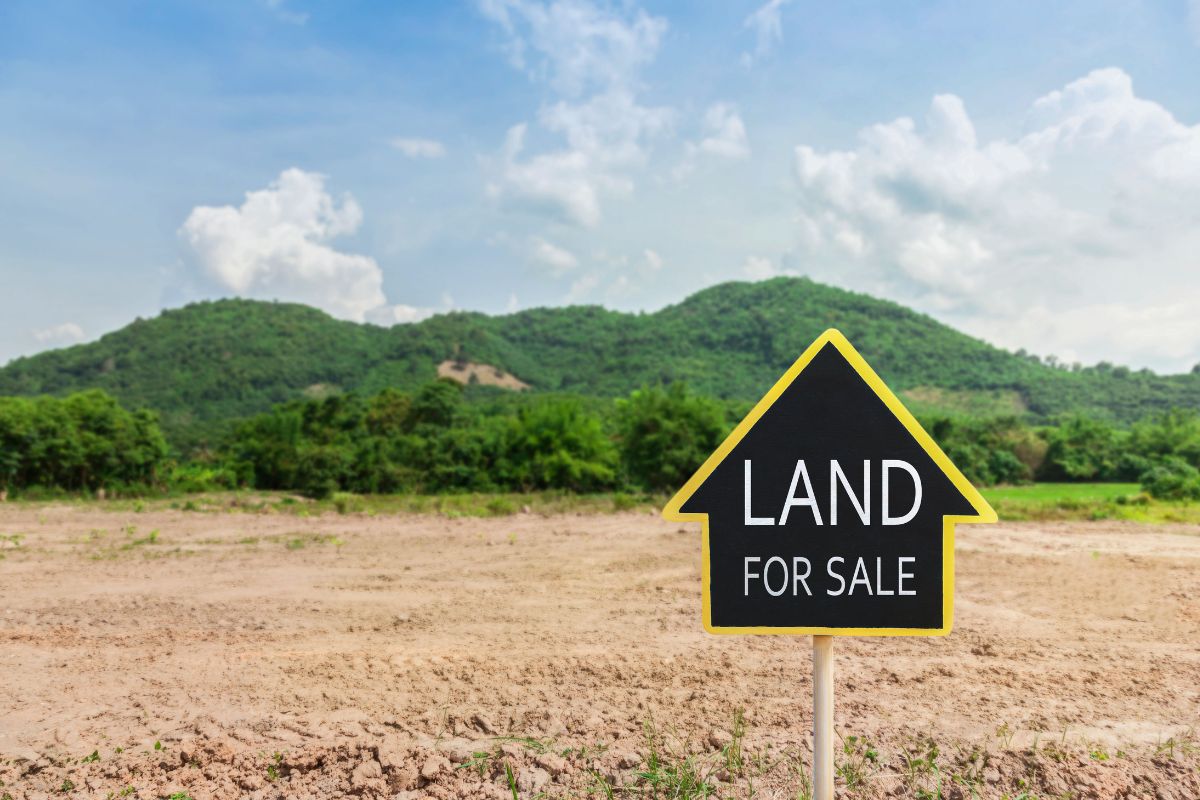
You should also tap into the massive reach of general sites like Zillow. And while you’re handling the digital side, remember one of the oldest tricks in the book: a good, clear “For Sale” sign on the property.
It’s surprisingly effective for grabbing the attention of people who already love your neighborhood and are ready to buy.
Closing the Deal: From Showings to Settlement
When you start getting inquiries, your job shifts to negotiating and guiding the deal forward. This part takes patience and a clear head.

Always be on time for property showings and know your material. Walk the land with buyers, clearly show them the property lines from your survey, and answer their questions about utilities or building potential. Your honesty and knowledge build the trust needed for a sale.
Expect that the first offer will probably be lower than your asking price. That’s just how it works. Go in knowing the absolute minimum you’ll accept, and be willing to compromise on other terms, like the closing date, to make the numbers work for everyone.
The last step is handling the closing process. This part makes many private sellers nervous, but it’s straightforward if you hire a real estate attorney.
While you saved money by not using an agent, the attorney’s fee is a fixed and necessary cost to make sure the sale is legally correct.
The attorney will manage all the complicated paperwork, which includes:
- Writing or reviewing the final sales contract.
- Working with the title company to transfer ownership.
- Overseeing the escrow account and the movement of money.
- Making sure the sale follows all local and state laws.
A real estate attorney manages the legal complexities of the transaction. This oversight protects your interests and guarantees a secure, orderly transfer of the property. The seller consequently finalizes the sale and retains the entire financial gain.
Conclusion
Selling your land yourself is a structured process. It requires you to manage the transaction, market the property strategically, and handle all the preparation.
You’ll need to invest a real amount of time and effort. The payoff, however, is that you keep the money that would have gone to an agent’s commission.
To attract serious buyers, you must market the property effectively and do your research. This means creating compelling listings and using a mix of online and traditional methods.
Follow the necessary steps to protect your full financial return and keep control of the entire process. You also need to hire a real estate attorney. This final step is what guarantees a legally secure closing.
