

Walk down any suburban street after a summer thunderstorm or winter ice event and you’ll notice a pattern: one house glows calmly while the rest sit in darkness.
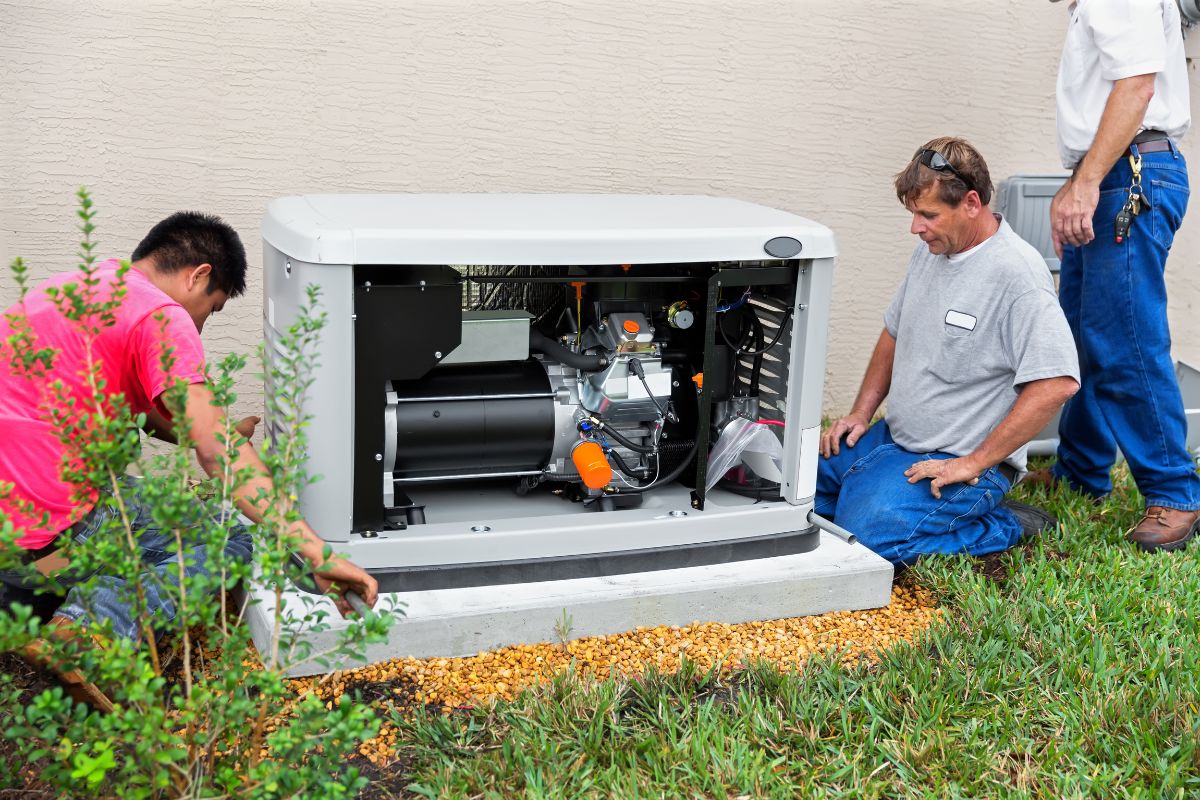
Peek behind that glow and you’ll often find a whole home generator humming along, keeping refrigerators cold, lights bright, and family routines intact.
What began as a luxury for the few has quietly become a practical step toward energy independence for many homeowners.
Energy independence isn’t just a buzz-phrase. It’s the relief of knowing that life (and work) can continue when the grid falters.
It’s the freedom to invest in electric vehicles or home offices without worrying about local power reliability.
And yes, it’s a way to protect the resale value of your property in a market that increasingly rewards homes with resilient features.
1. What Energy Independence Means at the Household Level
Energy independence used to refer to national policy, but in recent years it has trickled down to individual families.
In everyday terms, being energy-independent means:
- Reliability – Power stays on when the grid goes down.
- Predictability – You control (and can budget for) your own energy costs.
- Adaptability – You can add high-draw appliances—EV chargers, heat pumps, server closets—without stressing about local blackouts.
- Peace of Mind – Critical comforts and safety systems remain online no matter the season or storm.
A whole home generator anchors that independence by providing seamless backup power. When paired with solar panels or battery storage, it forms a layered safety net: solar for daily offset, battery for short outages, generator for prolonged events or cloudy stretches.
2. Why Dependence on the Grid Feels Riskier Than Ever
2.1 More Devices, More Demand
Smart thermostats, security cameras, induction cooktops, home offices—our houses now host a small network’s worth of electronics. A short outage that once felt like an inconvenience can now bring a digital household to a halt.
2.2 Aging Infrastructure
Many grids were built decades ago. Upgrades can’t always keep pace with extreme weather, urban growth, and modern consumption patterns.
2.3 Climate Uncertainty
Heat waves, ice storms, and hurricanes are no longer once-in-a-decade events. Seasonal disruptions are common, and homeowners have noticed.
Together, these factors push families to look for a permanent buffer. A whole home generator fits that need without requiring a dramatic lifestyle change.
3. How a Whole Home Generator Delivers Practical Energy Independence
| Generator Feature | Everyday Benefit | Long-Term Advantage |
| Automatic Transfer Switch | Power swaps over within seconds—no fumbling with extension cords at 2 a.m. | Continuous uptime protects expensive electronics and frozen foods. |
| Whole-House Capacity | HVAC, well pumps, freezers, medical devices—all covered. | Lets you keep living normally instead of “camping” in your own home. |
| Natural Gas or Propane Fuel | No gasoline runs during bad weather; tanks or pipelines are ready. | Lower maintenance and cleaner burn extend engine life. |
| Remote Monitoring Apps | Check fuel levels and runtime from a phone. | Know when to schedule service—avoid surprise failures. |
4. Choosing the Right Generator Without Overbuying
- Calculate Essential Load
- List appliances you can’t live without for 48–72 hours.
- Note starting (surge) watts vs. running watts.
- Add a 15 % safety margin—real-world conditions vary.
- List appliances you can’t live without for 48–72 hours.
- Match Fuel Source to Lifestyle
- Natural Gas: Unlimited runtime if you’re on municipal lines.
- Propane: Ideal for rural homes; tanks store well, burn clean.
- Diesel: High torque, but louder and requires more frequent fuel checks.
- Natural Gas: Unlimited runtime if you’re on municipal lines.
- Mind the Footprint
- Local codes usually require at least five feet of clearance from doors and windows.
- A slim, sound-attenuated enclosure can minimize neighbor noise and curb-appeal concerns.
- Local codes usually require at least five feet of clearance from doors and windows.
- Plan for Maintenance
- Annual oil and filter changes.
- Test runs under load every month or two.
- Keep spark plugs and belts in a labeled kit—future you will thank present you.
- Annual oil and filter changes.
5. The Financial Equation: Cost vs. Added Property Value
- Installation Cost: Roughly $8 k–$15 k for a mid-sized unit, including transfer switch and labor.
- Insurance and Resale: Some carriers give premium discounts for backup power; many buyers view a generator as a “bonus feature” similar to a new roof or remodeled kitchen.
- Operational Savings: Not direct fuel savings, but preventing frozen pipes, spoiled groceries, and lost work hours quickly offsets the upfront bill.
6. Integrating a Generator With Solar and Storage
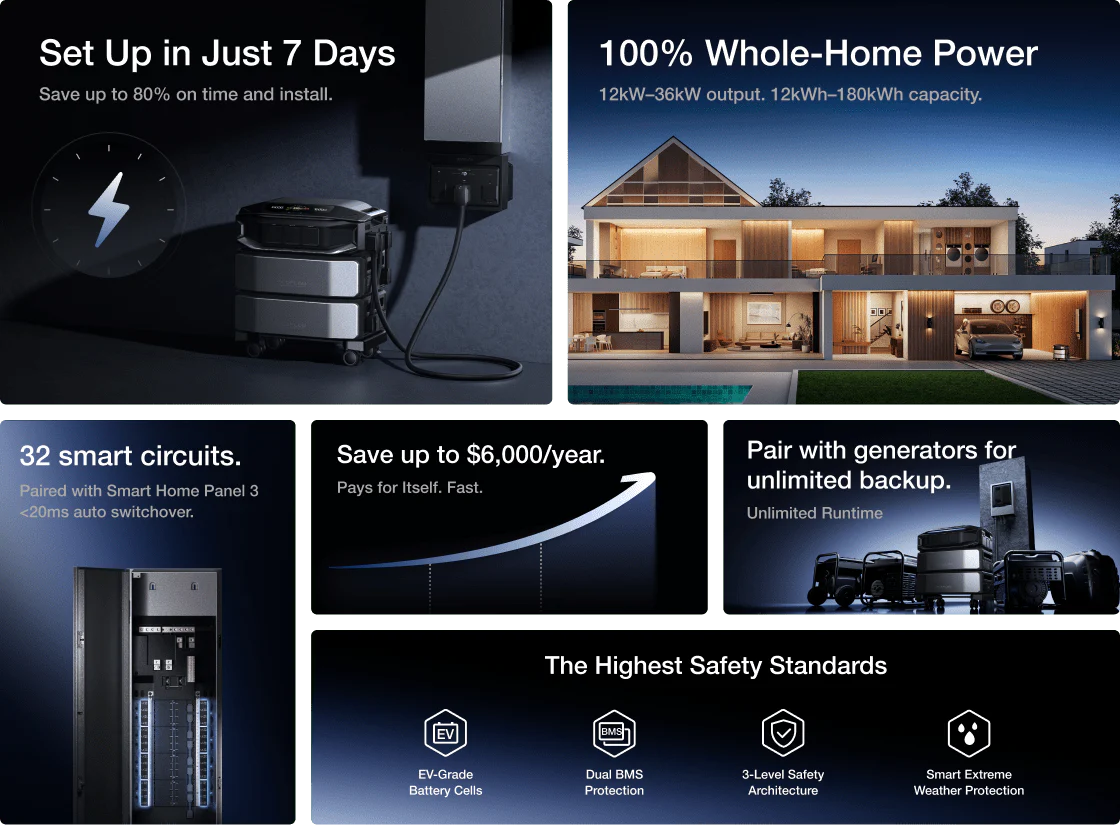
Many modern inverters can sync with a generator. When batteries hit a low state of charge, the generator fires up automatically, recharges the bank, then idles—saving fuel and emissions. This hybrid setup:
- Extends battery life cycles.
- Covers multi-day storms when solar alone falls short.
- Allows you to downsize the generator, since batteries handle short bursts.
8. Steps to Take Before the Next Storm Season
- Schedule a Roof & Electrical Inspection – Ensure service mast and panel can handle new loads.
- Gather Permits Early – Lead times vary; some counties require noise studies.
- Compare Warranties – Engine + alternator + transfer switch should align, ideally 5–10 years.
- Prepare a Fuel Plan – Top off tanks or confirm gas line capacity with your utility.
- Download Monitoring Apps – Familiarize yourself before an emergency, not during it.
Conclusion: An Investment in Comfort — and Control
Installing a whole home generator is less about bracing for doomsday and more about reclaiming control of everyday life.
Whether it’s preserving food, keeping kids’ routines steady, or safeguarding home offices, energy independence pays dividends in confidence and comfort.
As weather grows unpredictable and our houses grow smarter (and hungrier for electricity), a generator becomes less an indulgence and more a logical next step in modern home ownership.
So if your lights have flickered once too often—or you simply want to future-proof your biggest asset—consider following the growing number of homeowners who have decided that independence starts with a quiet hum in the side yard, ready to power on the moment the grid powers off.
