

Skylights have all the visual appeal of a traditional roof window with the benefits of being able to bring more light and air into your home.
They’re quickly becoming essential for modern homeowners looking at high-spec, eco-friendly renovations.
Below, we’ll explore how kitchens, lofts, garden rooms and living spaces can all be transformed with a skylight.
What Is an Opening Skylight?
An opening skylight is a roof window with a dual purpose, bringing in daylight and ventilation when required.
Unlike a fixed skylight, which is sealed, opening models allow you to increase ventilation and control indoor temperatures either manually or automatically.
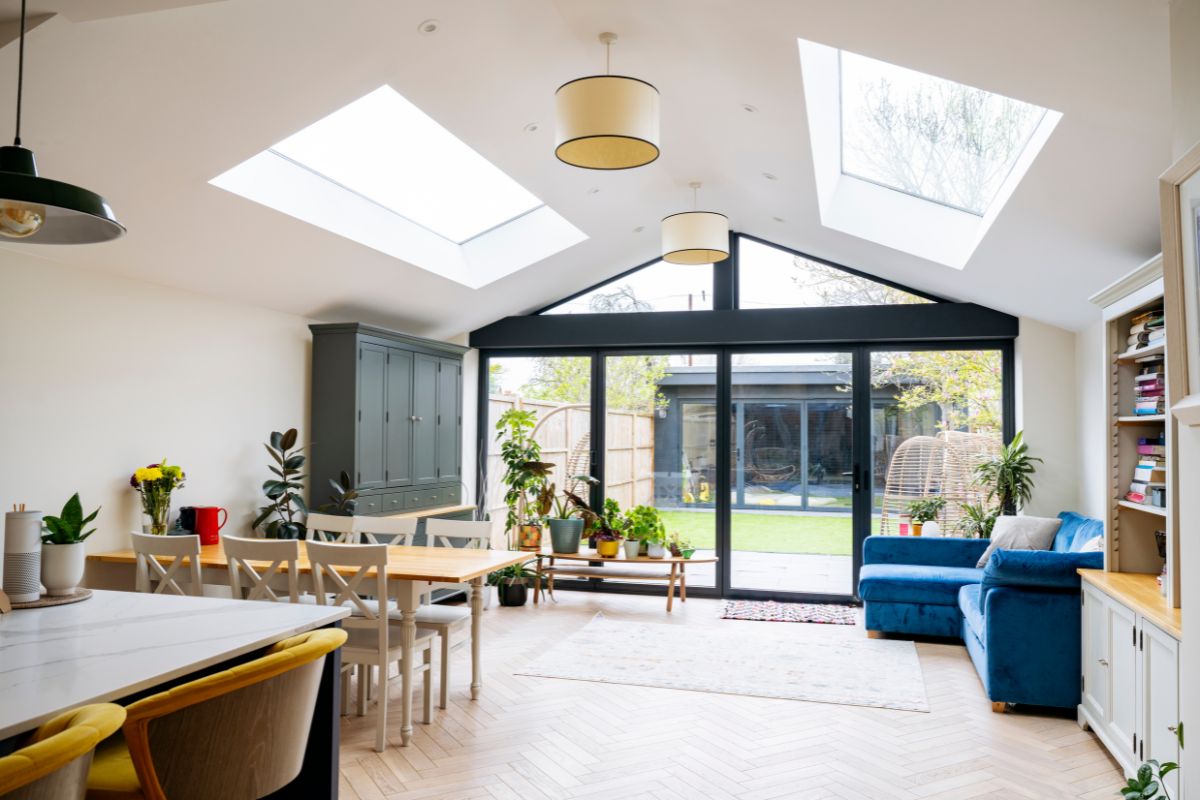
These are common in bathrooms, lofts, kitchens and garden rooms where light and airflow are important. Modern options come with high-performance glazing, remote control, rain sensors and sleek, minimalist frames.
Top Benefits
An opening skylight gives a room a complete transformation in terms of how it feels and functions. The main advantages are:
- Temperature control. Opening skylights release the room’s hot air where it accumulates the most. Anyone with any science knowledge knows that hot air rises. The roof is the best place for ventilation for temperature control.
- Improved ventilation. In bathrooms and kitchens, opening skylights can release steam and cooking odours. Even smoke, if you’re a terrible cook!
- Natural light. These windows flood a room with daylight so you don’t need to rely on artificial lighting. Natural light is a great mood-booster.
- Energy efficiency. Letting in sunlight and fresh air means you can lower your energy bills. It’s cooler in summer, warmer in winter sunshine.
- Healthier living environment. Fresh airflow regulates humidity. It prevents the buildup of condensation and mold.
- Improved aesthetics and value. Skylights make a room look modern and more spacious. They often increase property appeal and value.
Types of Opening Skylights
There are various types and styles to suit different needs and spaces. The main types are:
Manual opening skylights
These are operated with a hand crank, pole or latch. They are a budget-friendly option, but they’re better in places where the window is within reach.
Electric opening skylights
These have a wall switch or remote control to operate them. They’re ideal when the window is in a hard-to-reach area. Some of these also have rain sensors. This means that they close the window automatically when rain is detected.
Solar-powered opening skylights
These combine convenience with sustainability. This option charges using sunlight, and they often have smart sensors to help you control the temperature. Many have automatic ventilation cycles as well.
Centre pivot vs. top hung
Centre pivot options rotate in the middle, making them easy to clean. They’re ideal for lower placements. Top-hung versions open outward from the top. You get wide views and better airflow with these options.
Where to Install Opening Skylights
These can be installed in a range of places. Their placement is important, especially if you want to maximize the function and visual impact.
Kitchens and bathrooms will benefit from the extra ventilation an opening skylight provides. It will remove moisture, steam and odours so there’s less of a chance for mold to develop.
Lofts and attics can also benefit from a skylight, since these areas often lack natural light and airflow..
Living rooms and hallways can also have opening skylights, though this depends on the building. In a large room, multiple skylights can create a whole new atmosphere and look to a space.
Stairwells are one of the best looking options. Correct placement depends on the roof type and its slope. A professional installer can help you to decide the best angle and orientation.
Installation considerations
Fitting a skylight requires proper planning and professional installation. Not every skylight suits every roof, and the angle of the roof also influences light entry and drainage.
A roof may need reinforcement to accommodate a skylight, especially if it’s a large unit.
A structural assessment may be needed, especially if building regulations compliance is required. DIY fitting, while possible, can lead to poor insulation, leaks or damage to the roof.
It’s not recommended. Another consideration is planning permission. In most cases, skylights fall under permitted development, but if the property is listed or in a conservation area, you may need approval.

Maintenance and Long-Term Value
These are designed to be low-maintenance. Regular care can help preserve their appearance and function as well. Routine cleaning is important.
The glass needs cleaning every few months, especially if you live in an urban area or at the coast.
Be sure to inspect weather seals every year to check they’re still watertight. For solar or electric skylights, make sure there is no dust or debris in the mechanism.
Professional servicing periodically is recommended. This can extend the product life and prevent costly repairs down the line.
A well-installed, high-quality opening skylight will add value. Buyers are increasingly looking for homes that offer energy efficiency, natural light and good ventilation, all of which a skylight provides.
Insurance Implications
When planning to install an opening skylight, you might need to consider whether it affects your home insurance policy.
Structural changes (even those that improve ventilation) can affect your coverage if they’re not reported properly.
Many insurers require you to disclose modifications like skylights, especially if this involves change to a roof. This is because skylights can increase certain risks (water ingress, storm damage, accidental breakage).
If you don’t notify your insurer, you could invalidate your policy or face complications when making a claim.
The premium may be adjusted depending on the type of skylight, glazing used and how it’s installed. Double-glazed or laminated glass might be seen as more secure, for example, which is less risky.
Manual models without locking features could mean a higher premium. Always check with your insurer for the most accurate information.
Endnote
To enjoy the benefits of an opening skylight, consider the property’s needs, think about long-term maintenance and invest in expert installation.
The right product, the right planning, and the right maintenance makes an opening skylight a real investment into your home.
